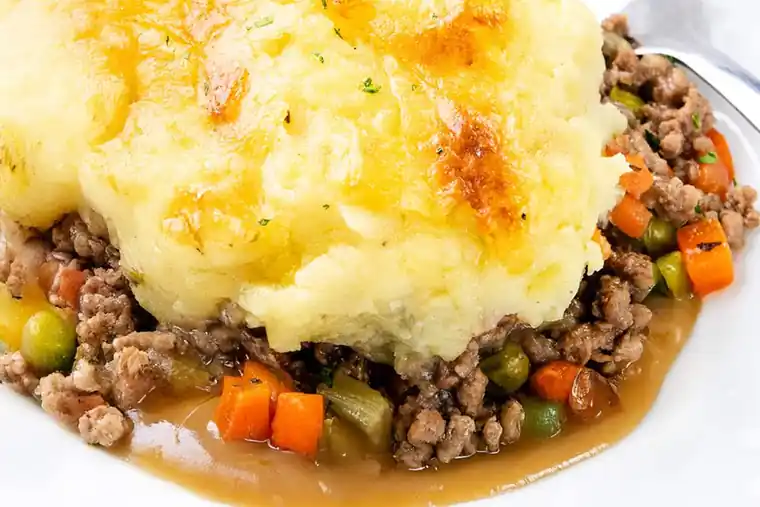
Traditional Cottage Pie
Beef mince in gravy with onion, carrot, celery and peas, under plain forked mash. The full recipe, with quantities in grams and millilitres.
View Recipe →
cottagepierecipe.uk · British home cooking
Cottage pie is one of the most practical dishes in British home cooking. Beef mince in a savoury gravy, covered with mashed potato, baked until the top is golden. This website is devoted to that one dish: the classic recipe, the variations worth knowing, and the small details that decide whether yours turns out rich and firm or watery and bland.
If you have come to cook, start with the recipe. If you want to understand the dish first, read on.
Exact quantities, times and oven temperatures live on the recipe page, where they belong — this page explains the dish and points you to them.
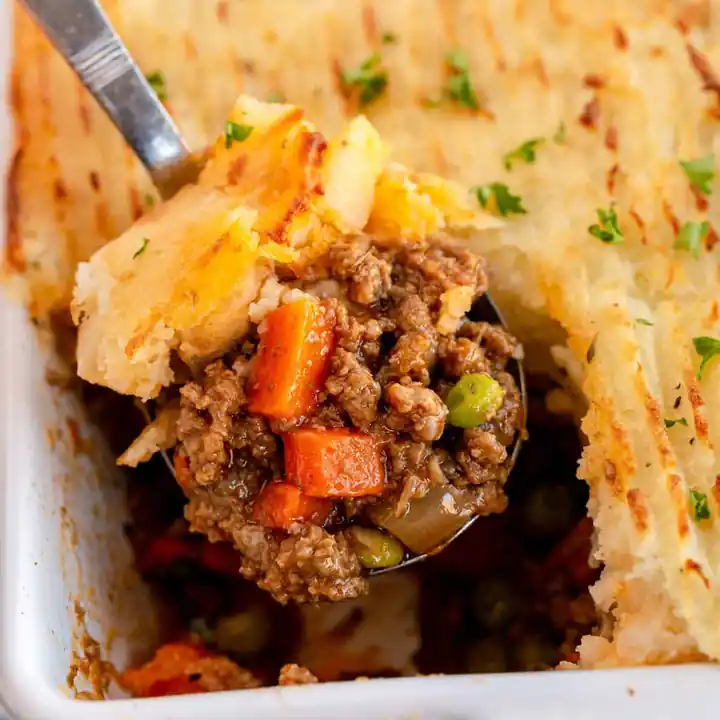
A layered photograph with CSS depth — shown honestly as a photograph, not a 3D model.
One core recipe, done well, plus the adaptations readers ask for most. Each variation card takes you straight to the relevant section of the Variations page. No star ratings are shown, because none have been collected.
Beef mince in gravy with onion, carrot, celery and peas, under plain forked mash. The full recipe, with quantities in grams and millilitres.
View Recipe →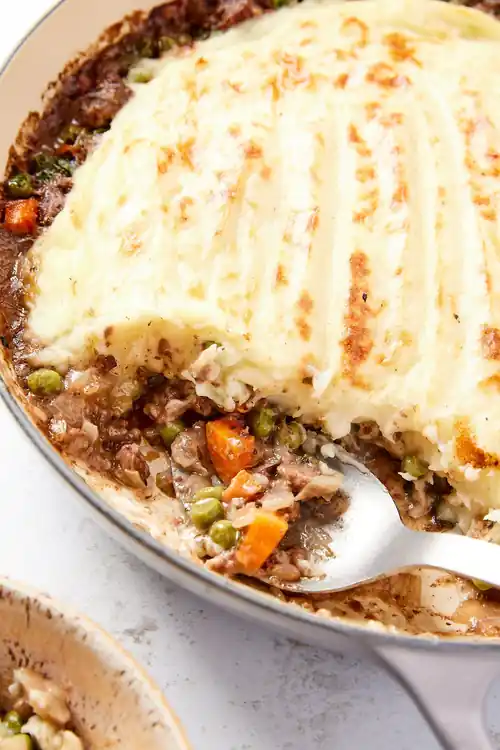
Grated mature Cheddar scattered over the forked mash before baking, for a richer, browner top.
Explore Variation →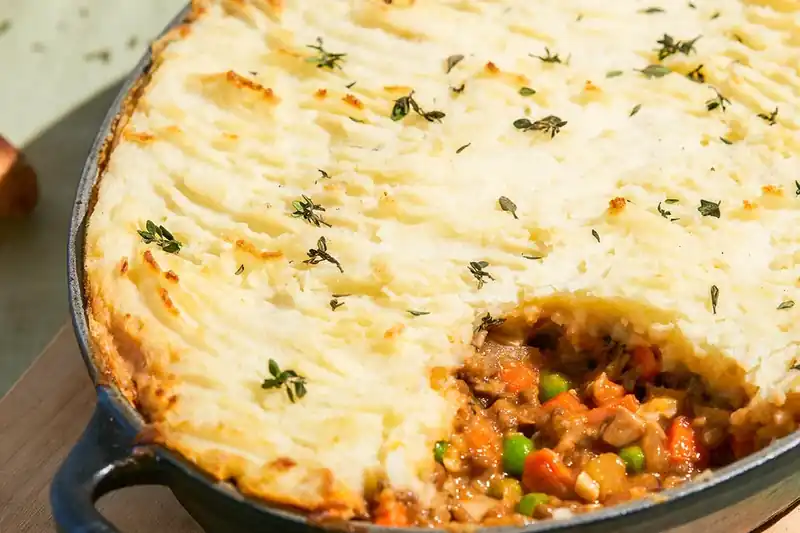
Green or Puy lentils in place of the mince, with vegetable stock. A variation in its own right — named honestly as one.
Explore Variation →Set a timer for the stage you are on. Add as many named timers as you need — simmering, boiling and baking can all run at once. Presets are there for convenience only; they are not recipe instructions. Always judge the pie by the cues in the recipe as well as the clock.
Sound is off until you enable it — browsers require a tap first.
Please note: the alarm can only sound while this page is open in your browser. It cannot be guaranteed if the browser is closed, the device is asleep, or the system suspends the page. Timer state is kept on this device only, so it survives moving between pages on this site.
Cottage pie is a baked dish of minced beef cooked in gravy, topped with mashed potato. The filling is made on the hob. The pie is then assembled in an oven dish and baked, so the potato crisps and browns on top while the filling bubbles gently underneath.
Two parts, one dish. The filling should be savoury and only just loose enough to spoon. The topping should be soft inside with a ridged, golden surface. When both parts are right, a portion holds its shape on the plate instead of spreading.
Cottage pie is also a forgiving dish. The filling can be made in advance. The whole pie reheats well. Leftovers freeze. That reliability is a large part of why it has stayed in British kitchens for so long.
One point of accuracy, because it causes endless confusion: the name follows the meat. Cottage pie is made with beef. Shepherd's pie is made with lamb. Modern cooks sometimes swap the terms, and some use “cottage pie” for any mince under mash. On this website the traditional distinction is kept, because it helps you find the recipe you actually want.
The two dishes are built the same way. They differ mainly in the meat, and in the seasonings that suit each meat.
| Point of comparison | Cottage pie | Shepherd's pie |
|---|---|---|
| Traditional main meat | Beef mince | Lamb mince |
| Filling base (shared components) | Onion, carrot and celery in a beef gravy | Onion and root vegetables in a lamb gravy |
| Typical seasoning | Thyme, bay, Worcestershire sauce, tomato purée | Rosemary or thyme; sometimes a little mint |
| Typical topping | Mashed potato, sometimes with cheese | Mashed potato; swede or other root mash also appears |
| Method | Shared: mince filling simmered, topped with mash, baked | |
Everything else — the dish, the assembly, the baking — is shared. If you can make one, you can make the other by changing the mince and the stock to match.
A word of caution about history. Cottage pie is often described as a way of using up leftover roast meat, and that is plausible. Exact dates and a single neat origin story are harder to prove than recipe books sometimes suggest. This site sticks to what can be stated with confidence: it is a long-established British dish of minced meat in gravy under mashed potato, named for the meat it contains.
Expect the names to be used loosely elsewhere. Supermarkets, pubs and ready-meal ranges do not all keep the distinction, and a “cottage pie” on a menu may occasionally turn out to contain lamb. That is precisely why the distinction is worth keeping at home: when you cook it yourself, the name on the recipe tells you which meat, which stock and which herbs you need before you start shopping.
The full quantities are on the recipe page. This overview explains the roles, so you can judge substitutions sensibly instead of guessing.
Beef mince is the centre of the dish. Standard mince gives a rich result. Leaner mince gives a lighter one, but needs its flavour built carefully, because there is less fat to carry it. Whichever you buy, brown it properly. Colour on the meat is flavour in the finished pie.
Onion, carrot and celery form the base. Onion brings sweetness. Carrot brings sweetness and body. Celery brings a savoury background note that you would miss if it were gone. All three are chopped small, so they soften into the gravy rather than sitting in lumps. Garlic is used briefly and gently; it should support the beef, not dominate it.
Plain flour thickens the gravy. It is stirred into the pan before the liquid goes in, which coats it in fat and stops it forming lumps. Tomato purée adds depth and a little acidity; a spoonful is enough, and it should not make the filling taste of tomato.
Worcestershire sauce adds savoury sharpness. It contains anchovy, which matters for fish allergies and for some dietary adaptations — the variations page covers what to use instead. Beef stock becomes the gravy; hot stock keeps the pan at temperature and helps the flour thicken evenly.
Thyme and a bay leaf are the classic herbs here. They suit beef and stand up to a long simmer. Frozen peas go in near the end: they add colour and sweetness, and they only need to heat through.
Floury potatoes — Maris Piper or King Edward are the usual British choices — mash light and fluffy. Waxy potatoes mash dense and can turn gluey. The variety matters more than any gadget.
Butter gives richness and flavour. Warm milk loosens the mash to a consistency that spreads without slumping; cold milk cools the potatoes and makes the mash heavier work. Salt and pepper are not optional details: under-seasoned mash is the commonest reason a cottage pie tastes flat, because the topping is half the dish.
Cheese on top is optional. Grated mature Cheddar gives a savoury, well-browned crust. The pie is complete without it.
The recipe page gives the full method with quantities, timings and cues to follow while you cook. This is the shape of it, in five stages.
Each stage has a failure mode, and they are all fixable. Watery filling, lumpy mash, a pale top — the recipe page works through each one, and the variations page covers changing the dish on purpose rather than by accident.
The classic pie is a starting point, not a rule. These are the adaptations this site covers, each on the variations page with every change explained properly: what changes, why it matters, and whether it has been kitchen-tested. Untested adaptations are labelled as suggestions, not presented as finished recipes.
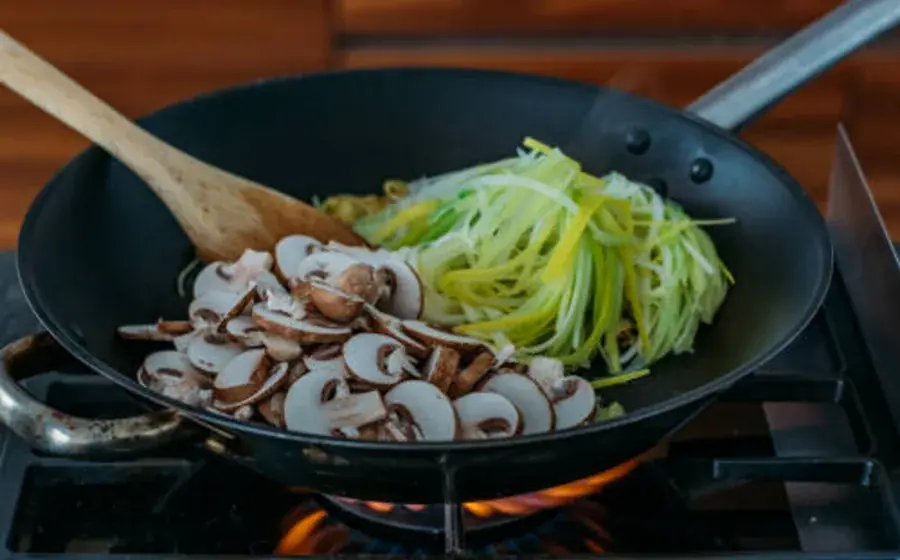
More of the base vegetables, plus mushrooms or root vegetables alongside the beef — with the extra simmering time their liquid needs.
Explore Variation →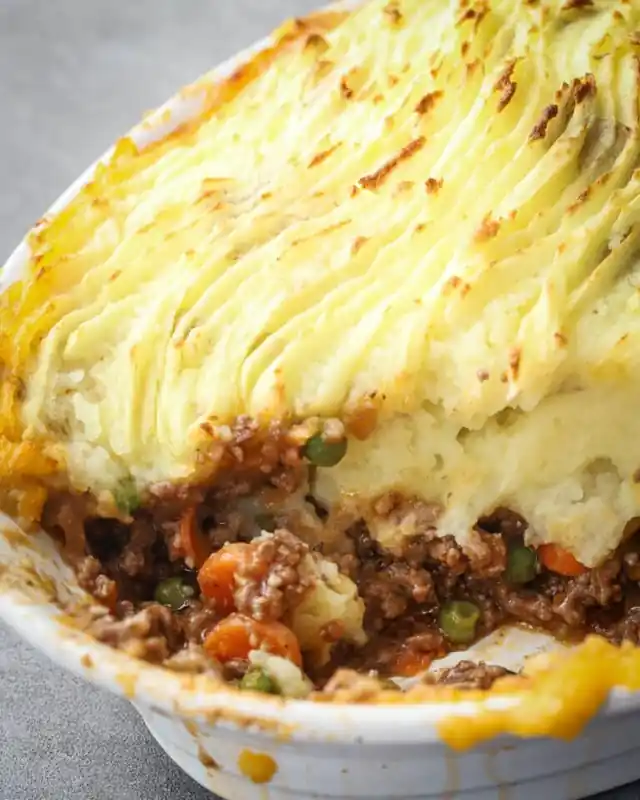
The same pie in ramekins. Small pies bake faster, freeze in portions, and suit households eating at different times.
Explore Variation →Of everything on this website, these five points change results the most. The recipe page's tips section covers the common mistakes in full.
Reduce the filling properly. Most disappointing cottage pies fail here. If the filling looks like soup in the pan, it will be soup under the mash. Simmer it until it is thick enough to mound slightly on a spoon.
Dry the potatoes before mashing. Drain them, return them to the hot pan for a minute, and let the steam escape. Wet potatoes make loose mash, and loose mash sinks.
Season both halves. Taste the filling. Then taste the mash. Fix each one on its own — seasoning only the filling leaves the top half bland.
Seal and ridge the top. Spread the mash to the edges so the filling cannot bubble up the sides. Ridge it with a fork: the ridges brown, and browned ridges are where the texture is.
Rest the pie. A short rest out of the oven lets the filling settle, so portions come out cleanly instead of sliding. The pie stays hot — resting is not the same as letting it go cold.
Cottage pie suits being made in advance, which is one reason it appears in so many weekly meal plans.
In advance: the filling keeps well and its flavour improves overnight in the fridge. The assembled pie can also wait in the fridge before baking. The recipe page gives the detail, including what happens to the baking time when the pie starts cold.
Leftovers: cool leftovers promptly — ideally within one to two hours — and refrigerate them at 0–5°C. Eat them within two days. Reheat only once, until the pie is steaming hot all the way through, including the centre. These timings follow Food Standards Scotland and Food Standards Agency guidance; the recipe page links to the official sources.
Freezing: the filling freezes on its own, and the assembled pie freezes whole. Defrost in the fridge and cook within 24 hours of defrosting. Freeze in portions if you usually reheat for one or two people — a portion defrosts and reheats far more evenly than a whole dish.
A safety point worth repeating: reheating is not a way to rescue food that has been stored too long. If leftovers have sat in the fridge beyond two days, throw them away rather than reheating them harder.
You do not need special equipment for cottage pie. You need the right-sized dish, and it matters more than most recipe books admit.
The dish. The filling and topping need room to sit in a layer that heats evenly. Too small a dish gives a deep pie that bubbles over and heats unevenly. Too large a dish gives a thin pie that dries out. The recipe page states the dish size its quantities were written for — use it, or scale the quantities to the dish you have.
The hob work. The filling is made in one large, wide pan. Width matters: a wide pan lets the liquid reduce, while a narrow, deep saucepan traps steam and slows everything down. If your pan is small, brown the mince in batches — crowded mince steams in its own liquid instead of browning, and the flavour difference is obvious in the finished pie.
The oven. Cottage pie is baked in a moderately hot oven so the top browns in roughly the time the filling takes to bubble through. Every recipe on this site gives both conventional and fan temperatures, because the two differ and guessing wrong by twenty degrees changes the result. The pie is ready by sight as much as by the clock: deep golden ridges, filling bubbling at the edges, and a top that feels set rather than soft. The middle shelf gives the most even result; a dish placed too high browns before the centre is hot.
Cottage pie contains meat, potato and vegetables in one dish, so it needs little alongside it. What it benefits from is contrast: something green, something sharp, or something with a different texture.
Green vegetables are the classic choice. Peas are already in the pie for most people, so look beyond them: buttered cabbage, spring greens, green beans or broccoli all work. Cook them simply — the pie is rich, and the vegetables are there to cut through it.
Pickles and sharp sides suit the dish better than most people expect. Pickled red cabbage, a spoonful of piccalilli or a simple dressed salad gives acidity that a gravy-rich plate lacks. Extra gravy divides households; if you serve it, serve it on the side and keep it thinner than the filling's own gravy. And bread for the plate juices is unglamorous and entirely reasonable.
What the dish does not need is more potato in another form. Chips or roast potatoes beside cottage pie are a duplication, not an accompaniment. If you want a bigger meal, add vegetables and a pudding, not a second helping of the topping on the side.
No. They are built the same way, but cottage pie uses beef and shepherd's pie uses lamb. The comparison table above shows the differences.
Yes. Make the filling, or assemble the whole pie, and keep it in the fridge until you are ready to bake. The section above covers storage times, and the recipe page covers baking from cold.
Floury varieties break down into a light, dry crumb. That gives mash which is fluffy rather than dense. Waxy potatoes hold their shape, which is useful in a salad and unhelpful here.
Yes, either as filling alone or assembled. Defrost it in the fridge, cook it within 24 hours, and reheat it until it is steaming hot throughout.
No. Cheese is a popular addition, not part of the definition. The pie is complete with plain mash, well seasoned and properly browned.
More questions — about ingredients, substitutions, leftovers and using this site's timer and print view — are answered on the FAQs page.
Cottage Pie Recipe exists to do one thing well: help home cooks in the United Kingdom make a good cottage pie, with instructions clear enough to follow on a phone with floury hands.
That is why every recipe page here carries exact quantities in grams, oven temperatures for conventional and fan ovens, and the visual cues that tell you a stage is done — not just a number of minutes. It is also why this site is plain about testing: the main recipe has been kitchen-tested by the site owner, and anything that has not been tested — the variations — is labelled a suggestion rather than a finished recipe. The site is written and run by its author, Michael.
Corrections are welcome. If you find an error in a quantity, a timing or an instruction, the contact page explains how to report it. More about cottagepierecipe.uk →
The full recipe, with quantities, step timers and a print view, is on the recipe page. Set a timer for the stage you are on using the timer on this page, and cook it in order. Beef, gravy, mash, oven, rest. That is the whole dish — and done carefully, it is hard to beat.
One dish, covered in depth: the complete cottage pie recipe, its variations, practical tips inside the recipe itself, a page of short answers, and a cooking timer that works on every page. There is no shop, account or newsletter.
On the recipe page. This homepage explains the dish and links to the detail, rather than repeating quantities and temperatures where they could be read out of context.
In the tips and common mistakes section of the recipe page, which works through thin gravy, sinking mash, a pale top and the wrong dish size, with a cause and a remedy for each.
No. There are no accounts on this site. The timer runs in your browser and its state is kept on your own device, so it keeps running as you move between pages here.
More questions are answered on our FAQs page.
Alarms work only while this page is open. State is kept on this device only.